
Water is a precious resource here in the West, much too precious to use just once. That’s why Denver Water has a program to treat and recycle wastewater.
Recycled water has successfully been used across the country for more than 100 years to supply water for irrigation, commercial and industrial uses. There are more than a dozen water recycling programs in Colorado, and Denver Water operates the largest recycled water system in the state.
Denver Water's Recycling Plant treats and delivers billions of gallons of water every year for industrial and outdoor irrigation uses. Once build-out is complete, the recycled water system will free up enough drinking water to serve almost 43,000 households.
Recycled Water Treatment System
Recycled Water Quality Standards
Recycled Water Training
Frequently Asked Questions
What is recycled water?
Recycled water is wastewater treated to a standard that is suitable for irrigation and some commercial and industrial uses. Denver Water's recycled water satisfies the Colorado Department of Public Health and Environment Regulation 84 for specific state-approved uses.
Why reclaim wastewater?
The system augments Denver's water supply for domestic uses by reclaiming water that otherwise would be discharged to the South Platte River. Denver Water owns rights to a significant amount of water that the Robert W. Hite Wastewater Treatment Plant treats and discharges into the South Platte River. Before the recycled water system was built, this water was lost downriver.
By building the recycled water system, Denver Water now supplies recycled water that can be used for irrigation, industrial and commercial operations that do not require the high quality of drinking water. Using recycled water also helps delay the time when it will be necessary to divert more water from the upstream watersheds and develop new mountain water supplies.
How is recycled water different from gray water?
Recycled water results from the treatment of domestic, municipal or industrial wastewater and is suitable for a direct beneficial use under Colorado Department of Public Health and Environment regulations. Gray water is untreated wastewater from common household fixtures such as bathtubs, showers, lavatory fixtures, wash basins, washing machines and laundry tubs. Gray water does not include wastewater from toilets, urinals, kitchen sinks, dishwashers or laundry water from soiled diapers.
Where is the plant, and who gets the water?
The treatment plant is located in Commerce City, a stone's throw from its source, the Robert W. Hite Wastewater Treatment Plant, and a key customer, Xcel Energy. Operations began early in 2004.
Denver Water's recycled water system serves numerous parks, schools, golf courses and other operations throughout Denver, including:
- The Denver Zoo
- Xcel Energy
- Several schools
- Golf courses
- Numerous parks
Recycled water is not currently available for residential use because of the additional infrastructure required and regulatory requirements that would be burdensome for individuals. Supplying industrial and irrigation customers with large demands results in a more efficient and economical system. Denver Water is continuing to expand the recycled water distribution system to reach more customers.
How will I know if water being used for irrigation is recycled?
Places using recycled water are clearly marked with signs identifying the water as recycled. Denver Water valve boxes, manhole covers, and newer sprinkler heads are purple. Some customers receive recycled water from Waters of the State (including ditch systems) that are regulated differently by the Colorado Department of Public Health and Environment. Regardless of how a recycled water customer receives water, all recycled water is treated at the same facility to meet the same water quality standards.
Waters of the State include water bodies such as the South Platte River system and Cherry Creek. After water is treated at the recycling plant, it must meet permit and water quality requirements under Regulation 61 before entering Waters of the State. Although customers who use Waters of the State are not subject to Regulation 84, they may choose to post signs or use purple irrigation equipment.
How safe is recycled water?
In 2009, Denver Water was granted Category 3 water quality status under state Regulation 84 for recycled water, which is the highest quality water status under this regulation. Although Denver Water’s recycled water meets the most stringent state water quality standards outlined in Regulation 84, it should not be consumed. Incidental contact with recycled water, such as walking on grass after it has been watered, is safe for adults, children and pets.
How is recycled water prevented from entering the drinking water system?
Recycled water is delivered to customers through a separate system of purple pipes. Before new customers begin using recycled water, Denver Water conducts site inspections to provide advice on connecting to the recycled water system.
Regulation 84 requires Denver Water to inspect customer systems each year and provide annual training to all customers to prevent contamination of drinking water by cross connections. Backflow prevention devices on drinking water systems at places that use recycled water are required to provide an extra measure of protection in ensuring that recycled water does not enter the drinking water system. Air-gap connections within the distribution system allow Denver Water to add drinking water to the recycled system for emergencies. The air gap prevents recycled water from entering the drinking water system. Denver Water’s Operating Rules and Engineering Standards provide additional information regarding the installation and use of recycled water.
What about recycled water and plant life?
Although many species of turf grass, trees and shrubs are tolerant of recycled water, landscape management is an important aspect of recycled water usage for irrigators. Water quality for trees and shrubs is important in determining whether plants will thrive. Soluble salts (salinity), sodium, bicarbonate, pH, nutrient elements, boron and chloride are important water quality aspects that can affect vegetation.
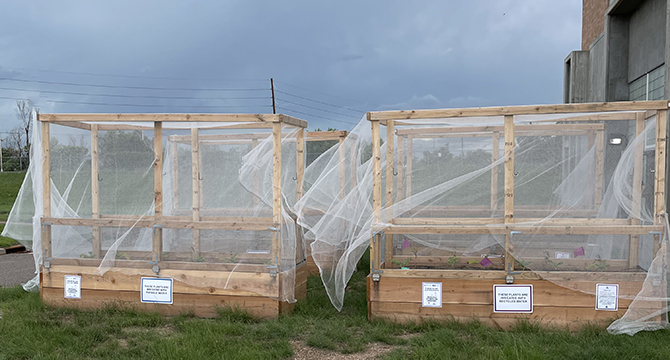
The Colorado Water Conservation Board (CWCB) is partnering with Denver Water to fund research into the impacts of using reclaimed water (also known as recycled water) to irrigate edible crops with a focus on soil health, crop yield and food safety.
This project will help inform decisions on water sources supplying urban and rural agriculture at various scales across the state and region based on public health and economic factors. The research team will compare how the three types of crops absorb contaminants of concern (including PFAS and select pharmaceuticals) and inorganic contaminants (like metals and nutrients) by planting three types of crops: root (carrots), leaf (kale), and fruit (tomatoes). Two beds will be irrigated with reclaimed water, and two beds will be irrigated with potable water.
The research team consists of staff from CU Denver College of Architecture and Planning, Colorado School of Mines Department of Civil and Environmental Engineering, Denver Water Recycled Water Program and the Recycling Plant.
The pilot is funded for three years, beginning in 2023, and will be active during the Colorado growing season.